


OUR UPDATES
Market News & Smart Tips
Apr 24, 2026
Does Your Home Really Meet Code Requirements?
By
Steve Freel
Does Your Home Really Meet Code Requirements?
In a quiet community in Natrona County, Wyoming, a troubling situation is raising an important question for homeowners everywhere: When a city issues a Certificate of Occupancy, does that truly mean a home meets code?
An 80-year-old widow purchased what she believed was a safe, newly constructed home, built in 2023 and approved by local officials. Like many buyers, she relied on the assurance that comes with a Certificate of Occupancy, a document issued by a municipality indicating that a home complies with applicable building codes and is safe for occupancy.
But according to documentation, inspections, and independent contractor evaluations, that assurance may not have been accurate.
A Home That Didn’t Match Its Plans
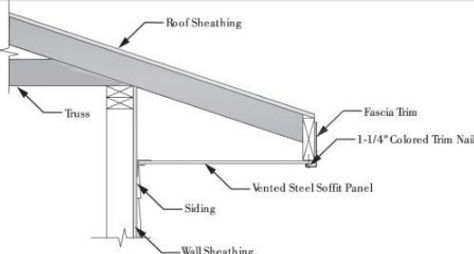
The home was constructed under approved building plans calling for a roof pitch of 2.5:12. However, independent measurements later confirmed the actual roof pitch was significantly lower, approximately 1.69:12.
That difference is not minor. It directly impacts what roofing materials are allowed.
Industry standards, and even publicly available municipal building guidance, require that roofs below a 2:12 pitch use specialized low-slope roofing systems. Asphalt shingles, the material installed on this home, are not permitted for that application.
Multiple licensed roofing contractors confirmed the same conclusion: the roof, as installed, does not meet applicable building standards and cannot be certified as compliant.
Where Did the Process Fail?
The situation raises serious concerns about how this passed inspection.
Based on the findings outlined in a detailed report and supporting documents:
The roof truss system was not constructed according to the approved plans
The discrepancy should have been identified during the framing inspection stage
Despite this, construction continued
Roofing materials inappropriate for the slope were installed
The project ultimately received a Certificate of Occupancy, indicating compliance
In other words, there were at least two critical points where the issue could, and arguably should, have been caught:
(1) during framing inspection and (2) during roofing inspection.
Neither stopped the project.
The Financial Impact
The consequences didn’t surface until the homeowner attempted to sell the property.
During the transaction process, inspections flagged the issue, and the roof could not pass due to code non-compliance. As a result, the homeowner was forced into a difficult position: replace the roof or risk losing the sale.
To move forward, she incurred approximately $10,000 in out-of-pocket costs to address the issue.
For someone in her position, an 80-year-old widow, this was not just a construction defect. It was a financial hardship tied directly to a system she trusted.
The City’s Response
The homeowner formally submitted a written request for reimbursement, outlining the failures in construction and inspection and the resulting financial damages.
In response, the municipality denied the claim.
According to the city’s position, the homeowner misunderstood the role of a city inspector. The implication: inspections are limited in scope and do not guarantee that construction fully complies with all building requirements.
That response raises a broader issue, one that extends beyond a single home.
A Larger Question for Homeowners
If a home can:
Be built outside of approved plans
Pass inspections without correction
Receive a Certificate of Occupancy
And still fail to meet code
…then what does that certificate actually represent?
And more importantly:
What is the true role of a city inspector?
Is it to verify compliance with approved plans and building codes?
Or is it something less, something that homeowners may not fully understand when they rely on it?
For many, a Certificate of Occupancy is viewed as the final stamp of approval, a safeguard. But this case suggests it may not always function that way in practice.
Why This Matters
This situation is not just about one homeowner.
It highlights a potential gap between:
What homeowners believe inspections guarantee, and
What municipalities believe they are responsible for
For buyers, sellers, and anyone building a home, that gap can carry significant financial risk.
And for communities, it raises a fundamental question:
When something slips through the cracks, who is ultimately responsible?
Jan 26, 2026
In Wyoming, the Primary Is the Election: Why Your Vote in August Matters
By
Steve Freel

When it comes to Wyoming politics, the real contest isn’t in November — it’s in the August primary. In our predominantly Republican state, the primary election often decides who will ultimately hold office long before any general election ballots are cast.
As someone who has served my community in local government, I’ve seen firsthand how low-turnout primaries can steer our state’s future. This is an urgent call to every Wyoming voter — young or old — to do your homework on the candidates and show up for the primary, because the stakes couldn’t be higher.
Wyoming’s Primary: The Election That Really Counts
In Wyoming, one party overwhelmingly dominates elected offices, which means winning the Republican primary is often the key to winning the seat. In many races, there is little to no competition in the general election, effectively making the primary the only meaningful vote.
When voters sit out the primary, they are forfeiting their say in who represents them.
Wyoming law itself reflects how decisive primaries have become. Efforts to restrict party-switching ahead of primary elections exist because lawmakers understand the reality: the primary is where power is decided. The choices made in August frequently shape Wyoming’s government long before November arrives.
Unfortunately, primary turnout is often low. When participation drops, the influence of small but highly motivated factions grows. In some races, a few dozen votes can determine the outcome. When moderate, independent, or younger voters stay home, the field is left to those with the loudest and most extreme voices.
The result is predictable: candidates who do not reflect the views of the broader public can gain office and face little resistance later.
Do Your Homework: Know the Candidates (Not Just the Name)
Voting is not a lottery or a popularity contest — it is a hiring decision for who will run our cities, counties, and state. Too often, voters rely on name recognition or party labels without understanding who the candidate really is.
In Wyoming’s primaries, that mistake can have lasting consequences.
Before you vote, take the time to learn who the candidates are and what they stand for:
Review experience and records. If a candidate is an incumbent or has held office before, look at their voting history. Did their decisions strengthen local communities, or did they create harm?
Understand their positions. Taxes, education, healthcare, and economic development are not abstract issues. Wyoming faces real challenges, and voters should expect clear, practical solutions — not slogans.
Pay attention to influence. Who is funding the campaign? Who is advising the candidate? These relationships matter.
Engage directly. Candidates in Wyoming are accessible. Forums, community events, and direct questions reveal far more than mailers or social media posts.
Be cautious of familiarity. A recognizable last name or a long list of yard signs does not equal leadership. Candidates should earn votes through substance and accountability.
Leadership requires judgment, independence, and the ability to govern — not just the ability to generate attention.
When Voters Stay Home: The Freedom Caucus Takeover
If anyone doubts why informed primary voting matters, they need only look at what is happening in Cheyenne.
In the most recent election cycle, a bloc of ultraconservative legislators — commonly known as the Wyoming Freedom Caucus — won a series of low-turnout primary races. Many unseated more moderate incumbents and then faced little or no opposition in the general election.
Once in office, the results were swift and alarming.
Recent legislative actions have included:
Major tax cuts with no backfill for essential services
Deep funding reductions to the University of Wyoming
Efforts to dismantle or defund the Wyoming Business Council
Cuts affecting healthcare, mental health services, and assistance for vulnerable populations
These were not modest budget adjustments. They were sweeping, ideological moves that placed jobs, education, healthcare, and economic development at risk — even while the state maintained strong revenues.
Perhaps most troubling is how these decisions were made. Evidence has emerged that votes and talking points were coordinated through scripted instructions, undermining independent judgment and open debate. This type of lockstep behavior turns elected officials into messengers rather than representatives.
That should concern every voter, regardless of party affiliation.
Every Vote Matters: Educated Voters Can Save Wyoming
The lesson is clear: if Wyoming is to remain stable, prosperous, and grounded in common sense, informed voters must show up — especially in the primary.
This is not an exaggeration. The future of our schools, local governments, economy, and civic culture depends on participation.
Young voters. Lifelong residents. First-time voters. Retirees. Parents. Business owners.
If you care about the direction of Wyoming, you must vote in the primary.
Complacency is how extremism gains power. When reasonable people disengage, organized minorities take control.
Engagement means researching candidates, asking hard questions, and participating even when the process feels frustrating or predetermined. In Wyoming, the primary election is where leadership is chosen — whether most voters participate or not.
A Responsibility We All Share
Wyoming has always valued independence, accountability, and community. With those values comes responsibility — the responsibility to protect our state from poor governance and ideological overreach.
If we want a future that serves our children and grandchildren, we must become educated voters and show up when it matters most.
The primary election is coming. Candidates will be knocking on doors and asking for support.
Listen. Learn. Ask questions.
Then vote.
Because in Wyoming, the primary is the election — and your vote may be the one that decides the future of our state.
By Steve Freel
Former Mayor of Casper
Former Chairman, Natrona County Commission
Sources
Wyoming’s Republican dominance and primary election structure
Primary election turnout data and participation trends
Legislative budget actions affecting the University of Wyoming and Wyoming Business Council
Reporting on Freedom Caucus legislative coordination and internal voting practices
Commentary on the importance of informed voting and legislative accountability
Dec 12, 2025
Here’s what’s being built at CY & Wyoming — Casper, you asked!
By

If you’ve been wondering what’s going up at the corner of SW Wyoming Blvd and CY Avenue, you’re not alone — I’ve been getting that question a lot lately.
I stopped by today to give you the answer:
👉 The new building will be the future home of North Platte Physical Therapy!
They’re relocating just down the street, and their new address will be:
📍 3910 Denis Drive, Casper WY
It’s great to see continued commercial growth in our community, and I’ll keep sharing updates as new projects move forward.
If you ever have questions about new development, commercial real estate, or what’s happening around Natrona County, I’m always here to help keep you informed.
Visit my website anytime at www.casper247.com.
— Steve Freel, Vertical Realty Group, LLC
Dec 9, 2025
🏛️ City Manager vs. Mayor: Understanding How Local Government Works
By
Steve Freel

Every so often, questions come up in our community about how our local government operates and why certain decisions are made the way they are. One question I hear often is:
“Why don’t the citizens get to vote for the Mayor?”
It’s a fair question — and the answer has everything to do with the type of government structure our city operates under. Not every city in the United States uses the same system, and understanding these differences can help all of us better engage in local government and know where our voice truly matters.
🔹 Two Common Forms of Local Government
Across the country, cities typically use one of two main structures:
1. The City Manager Form of Government
2. The Mayor (or Strong Mayor) Form of Government
Both models are widely used. Both are legal and effective. They simply distribute responsibilities differently.
🔹 How the City Manager Form of Government Works
In a City Manager system, the citizens’ role is actually very clear and very powerful:
The public elects the City Council.
From there:
The City Council selects one of its own members to serve as Mayor and Vice Mayor.
A professional City Manager— someone hired based on training and experience, not politics — oversees the city’s daily operations.
The Mayor’s responsibilities are primarily legislative and ceremonial, not administrative.
In other words:
**The Mayor in this system is not the person running the city.
The City Manager is.**
This structure is designed to minimize political influence in day-to-day operations and ensure the city is managed by qualified professionals. That is why, in a City Manager system, citizens do not vote directly for the Mayor — because the Mayor is part of the governing council, not the executive branch.
It’s not “un-American.” It’s simply a different—and very common—form of municipal government.
🔹 How the Mayor (Strong Mayor) System Works
In a Mayor-driven system, things look very different:
Citizens elect the Mayor directly.
The Mayor serves as both political leader and the city’s chief administrator.
The Mayor has executive authority over departments, operations, and staffing.
In this model, the public has a direct vote on who leads the city, which is why people often assume that all cities work this way — but they don’t.
Both systems serve their communities in different ways, depending on local needs and history.
🔹 So Why Does Our City Council Elect the Mayor?
Because our city uses the City Manager form of government, the Mayor is chosen from among the elected Council members. That’s how the structure is designed.
Citizens still maintain full power through:
Electing Council members
Speaking at public meetings
Voting on charter changes when applicable
Participating in local processes and committees
If a community ever decides it wants a different form of government — such as switching to a Mayor-led system — that would be a community-level decision, typically done through charter review, ordinance changes, or in some cases, a public vote.
🔹 Understanding the System Helps Us Use Our Voice Better
No matter which structure a city uses, the goal is the same:
To create an effective, stable, and responsive local government.
By understanding how the system works, we can:
Hold the correct officials accountable
Participate more effectively in local discussions
Avoid misunderstandings about the roles of Mayor, Council, and City Manager
Strengthen the relationship between citizens and local leadership
🟦 Final Thoughts — From Your Neighbor, Not Just Your Realtor
I believe an informed community is a strong community. That’s why I share information like this — not as a political statement, but simply to help people understand how our city operates.
If you ever have questions about local issues, real estate, or how decisions affect our neighborhoods, I’m always happy to help.
By Steve Freel, Vertical Realty Group — Keeping You Informed About Your Community
Nov 23, 2025
LOCAL COMMERCIAL DEVELOPMENT — MONTHLY UPDATE
By
Steve Freel

City of Casper • Building Department Summary
📊 October Permitting Snapshot
The City of Casper saw steady construction activity throughout October, reflecting continued investment in both residential and commercial development.
New Single-Family Housing
7 permits issued for new single-family homes
$2,225,181.65 in new residential construction value
Year-to-date total: 59 new homes
YTD construction value: $24,021,721.44
Overall October Permit Activity
Across residential and commercial sectors, the Building Division issued:
109 Building permits
82 Electrical permits
57 Mechanical permits
68 Plumbing permits
Total construction value for October: $6,363,198.34
Total permit revenue collected: $70,267.18
📅 Year-to-Date Overview (Jan 1 – Oct 31)
3,040 total permits issued
$139,210,030.14 in permitted construction value
$1,243,321.98 in revenue generated
📆 Fiscal Year-to-Date Overview (Jul 1 – Oct 31)
1,306 permits issued
$42,668,147.99 in construction value
$373,017.57 in revenue
🔍 October Inspection Activity
The Building Division remained active in the field, completing:
167 Building inspections
247 Electrical inspections
156 Plumbing inspections
49 Mechanical inspections
1 Plan review
🏗️ Commercial Construction Update
There are currently 19 major commercial projects actively progressing within the City of Casper. These projects continue to support economic growth, expand retail and service offerings, and enhance the city’s overall commercial landscape.
Nov 19, 2025
📣 East Casper Growth Update: Six New Stores Now Under Construction at Blackmore Marketplace!
By
Steve Freel

Hello Casper Community,
I’m excited to share a major development update for our east side that many of you have been asking about. After completing the City of Casper’s permitting process, six national retailers are now officially under construction in the Blackmore Marketplace on Newport Street. This expansion is a significant addition to our growing retail corridor and brings more convenience, variety, and name-brand shopping options to our community.
Here’s a quick look at who’s coming:
📍 5 Below – 560 Newport
Affordable and fun products for families, teens, and everyday shoppers.
📍 Sierra Trading Post – 500 Newport
Outdoor gear, footwear, and active lifestyle apparel.
📍 HomeGoods – 520 Newport
Home décor, furnishings, kitchenware, and seasonal household items.
📍 Burlington – 540 Newport
Clothing, footwear, accessories, and home essentials for the whole family.
📍 Maurices – 580 Newport
Women’s fashion, denim, basics, and accessories.
📍 Barnes & Noble – 600 Newport
Books, gifts, educational items, and a community-friendly café environment.
With construction underway, the Blackmore Marketplace is well on its way to becoming a vibrant retail destination for residents and visitors alike. Over the coming months, we should see steady progress as foundations are poured and buildings begin to take shape.
As always, I’ll continue to keep you informed with updates on opening timelines, new additions, and overall community growth.
If you have questions about local development, commercial opportunities, or residential real estate in Casper, I’m always here to help.
Thank you for staying connected, and thank you for trusting me as your source for community and real estate updates.
Warm regards,
Steve Freel
Broker/Owner – Vertical Realty Group
📞 307-259-1276
📧 stevefreel247@gmail.com
🌐 www.casper247.com
Nov 8, 2025
Professionalism and Integrity Still Matter in Real Estate
By
Steve Freel

Recently, there’s been some rebranding activity among local real estate firms that has caught the attention of both the industry and the public. While every company has the right to define its own image, it’s important to remember that branding alone doesn’t build credibility — actions do.
At Vertical Realty Group, we believe a name should represent the principles behind it: trust, integrity, and professionalism. Our reputation isn’t built through flashy marketing or reinterpretations of words that once carried very different meanings. It’s built through years of honest work, client respect, and consistent results.
In today’s world, where perception can be shaped by spin or even AI-generated narratives, clients deserve the reassurance that their agents — and their brokerage — stand firmly on ethical ground.
At Vertical Realty Group, we remain committed to:
Representing every client with transparency and expertise
Conducting our business with respect for all parties involved
Upholding the highest standards of honesty and accountability
Professionalism isn’t a trend — it’s a responsibility. And we’re proud to keep it that way.
— Steve Freel, Broker/Owner, Vertical Realty Group, LLC